This phishing email attempts to impersonate an academic or administrative reporting system by claiming a student support form has been submitted. While it appears professional and calm, several inconsistencies reveal it as a scam designed to prompt interaction or eventual credential theft.
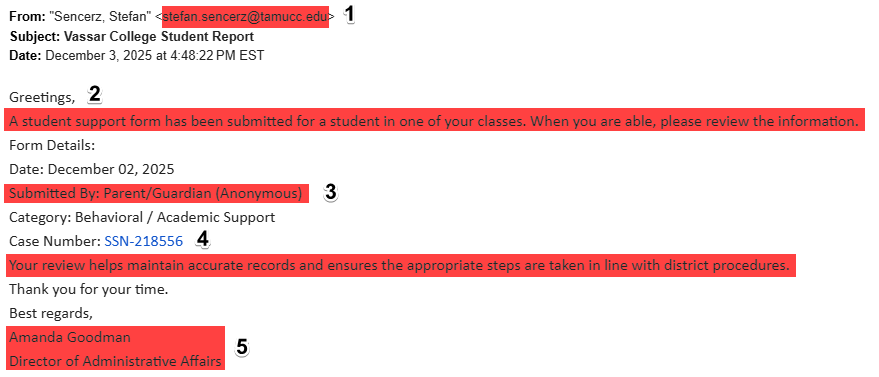
Red Flags in This Attack
- Mismatched Sender and Institution. The email claims to concern Vassar College, but the sender’s address is from
@tamucc.edu. Legitimate communications about Vassar students would come from a@vassar.eduaddress or an official Vassar system. - Generic and Vague Language. The message does not mention: The student’s name, the course name, the specific issue, any identifiable academic system used by Vassar. Phishing emails often rely on vague wording so they can be sent to many recipients without customization.
- Anonymous Submission Claim. The form is allegedly submitted by a “Parent/Guardian (Anonymous)”, which is unusual for legitimate academic or behavioral reporting processes. Most real student support systems require verified identities.
- Sense of Obligation Without Verification. Phrases like “Your review helps maintain accurate records” and “ensures appropriate steps are taken” subtly pressure the recipient to act, a common social-engineering tactic. However, no secure link, internal portal, or official process is clearly identified.
- Signature Does Not Match the Sender. The email is signed by “Amanda Goodman, Director of Administrative Affairs”, but the sender name is “Sencerz, Stefan”. This mismatch strongly suggests impersonation. Legitimate emails should almost always have consistent sender and signature identities.
What to Do If You Receive an Email Like This
- Do not reply or click on any follow-up links
- Verify internally using known Vassar contacts or systems
- Report the message as phishing through your email client and submit this report to the catch of the day so that others can become aware of this phishing attack.